


How did Dundee get so good at the Commonwealth Games?

The Commonwealth Games return to Scotland tonight, but one question feels more relevant than ever to me: how did Dundee get so good at the Commonwealth Games?
For almost 70 years, athletes with connections to Dundee have repeatedly delivered some of Scotland’s greatest moments on one of the world’s biggest sporting stages.
Across athletics, boxing and cycling, they have won gold medals, broken records and inspired generations, helping transform Dundee into one of the Commonwealth’s most remarkable sporting cities.
Some of Scotland’s greatest Commonwealth Games memories have their roots in Dundee.
Dick McTaggart announced himself as one of the world’s finest amateur boxers in Cardiff.
Liz McColgan thrilled a home crowd with gold in Edinburgh.
Mark Stewart stood proudly on top of the podium on Australia’s Gold Coast.
Then, in Birmingham, Eilish McColgan, Laura Muir and Sam Hickey produced a remarkable run of performances that cemented the city’s reputation as a genuine Commonwealth Games powerhouse.
Now, as the Games prepare to return to Scotland for the first time in 12 years, Dundee once again finds itself at the heart of the story.
Returning champions will pull on Team Scotland colours once more, exciting debutants with Dundee connections are preparing for the biggest competitions of their careers.
Eilish McColgan has become one of the faces of Glasgow 2026 as a flagship Games ambassador, and KT Tunstall - who famously began her music career busking on the streets of Dundee - will perform at the opening ceremony at the Hydro later this evening.
So, how did a city of 148,000 people build such an extraordinary Commonwealth Games legacy?
The answer stretches back almost seven decades and begins with one of the greatest athletes Dundee has ever produced.
It all started with a boxing legend
Long before Dundee became synonymous with world-class middle and long-distance runners, the city had already announced itself on the international sporting stage through boxing.

Dick McTaggart was already an Olympic champion when he arrived at the 1958 Commonwealth Games in Cardiff, having claimed lightweight gold in Melbourne two years earlier.
Expectations were high, but McTaggart once again delivered, adding Commonwealth gold to his growing list of achievements and further cementing his reputation as one of the greatest amateur boxers Britain has ever produced.
For Dundee, however, his success represented something much bigger than one man’s remarkable career. McTaggart proved that athletes from a relatively small Scottish city could compete against - and defeat - the very best the Commonwealth had to offer.
His achievements inspired generations of young boxers across Dundee, helping establish a proud boxing tradition that continues today through clubs including Lochee Boys Boxing Club.
More than 65 years later, his influence can still be seen every time another Dundee boxer steps into the ring wearing Scotland colours.
Nearly three decades would pass before Dundee celebrated another defining Commonwealth Games moment, but when it arrived, it would inspire a whole new generation of athletes.
Liz McColgan changes everything
The 1986 Commonwealth Games in Edinburgh remain one of Scotland’s most memorable sporting occasions, and among the defining images of those Games was Liz McColgan crossing the finish line to win gold in the women’s 10,000 metres.
Competing in front of a home crowd, she produced a commanding performance that not only secured one of Scotland’s most celebrated victories but also established herself as one of the country’s greatest-ever distance runners.
For Dundee, McColgan’s triumph represented far more than another medal. It gave the city a new sporting icon whose influence would stretch well beyond the athletics track.
Young runners suddenly had someone local to look up to, someone who had shown that dedication, perseverance and talent could carry a Dundonian all the way to the top of the Commonwealth podium.
Her success helped strengthen Dundee’s already growing sporting culture and inspired countless young athletes to dream of following in her footsteps.
Among those watching was someone who would one day make history herself.
Her daughter, Eilish.
At the time, nobody could have imagined that more than three decades later another McColgan would stand on top of the Commonwealth podium in the very same event, creating one of the most remarkable family stories the Games have ever witnessed.
A new generation begins to emerge
For many years, Dick McTaggart and Liz McColgan stood as the defining names in Dundee’s Commonwealth Games story. Their achievements had inspired generations of athletes across the city, but as the years passed a new wave of sporting talent was quietly beginning to emerge.
Built on the foundations laid by those who came before them, Dundee was once again producing athletes capable of competing on the biggest international stages, proving that the city’s sporting success was no longer confined to a single era or discipline.
That new chapter became clear at the 2018 Commonwealth Games on Australia’s Gold Coast. Among Team Scotland’s standout performers was Dundee cyclist Mark Stewart, who played his part in another hugely successful Games for Scottish cycling by winning gold.
His triumph demonstrated that Dundee’s sporting excellence extended well beyond athletics and boxing, adding cycling to the city’s growing list of Commonwealth success stories.
Looking back, Gold Coast 2018 now feels like an important turning point. It marked the beginning of a new generation of Dundee athletes who would go on to enjoy unprecedented success just four years later.
Birmingham 2022 was Dundee’s greatest Commonwealth Games
If Gold Coast hinted at Dundee’s growing strength, Birmingham confirmed it beyond any doubt.
Across eleven unforgettable days, athletes with Dundee connections delivered one remarkable performance after another, helping make the city one of Scotland’s biggest success stories of the Games.
By the time the Closing Ceremony arrived, Dundee had celebrated champions across multiple sports, each adding another chapter to what was already an extraordinary Commonwealth legacy.
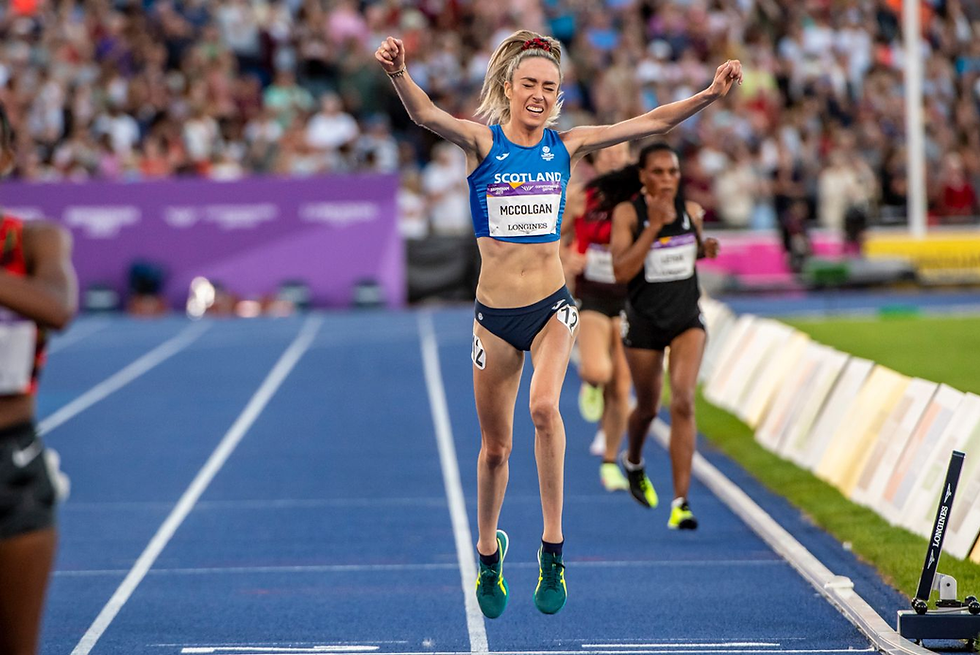
The defining moment came in the women’s 10,000 metres, where Eilish McColgan produced a performance that instantly became the greatest moment in Commonwealth Games history.
Racing in Birmingham, she broke clear of the field to claim an emotional gold medal, crossing the finish line in scenes that captivated audiences across Scotland and beyond.
It was a victory that carried enormous significance as she emulated mum Liz 36 years after she won Commonwealth gold in the same event in Edinburgh, Eilish repeated the achievement, making the McColgans one of the most remarkable families in sporting history.
Days later, she added a silver medal in the 5,000 metres, completing a memorable Games that further established her as one of Scotland’s greatest athletes.
The impact of that unforgettable victory has only grown with time.
In the build-up to Glasgow 2026, fans from across the Commonwealth voted Eilish McColgan’s 10,000m triumph as the greatest Commonwealth Games moment of all time, placing it above some of the most iconic performances ever witnessed at the Games.
It was recognition not only of an outstanding athletic achievement, but of the emotion, determination and family story that resonated with millions of people. For Dundee, it represented something even more special.
One of the city’s own had created a moment that would forever be remembered as the greatest in Commonwealth Games history.
Yet Birmingham was never simply the story of Eilish McColgan. Dundee’s influence could be seen throughout the Games.
Laura Muir, a member of the Dundee Hawkhill Harriers, delivered another composed and commanding performance to win gold in the women’s 800 metres, adding another major title to her remarkable career and giving the city another Commonwealth champion to celebrate.

In the boxing ring, Sam Hickey continued the proud tradition established decades earlier by Dick McTaggart, fighting his way to gold with a series of assured performances that once again showcased the strength of Dundee boxing on the international stage.
Taken together, those achievements told a remarkable story.
Across athletics and boxing, Dundee athletes had produced some of Scotland’s defining moments of Birmingham 2022, demonstrating not only individual brilliance but the depth of sporting talent the city continues to produce.
For a city of Dundee’s size, it was an extraordinary contribution to Team Scotland’s success and one that further strengthened its reputation as one of the country’s most successful sporting communities.

Perhaps that is what makes Dundee’s Commonwealth Games story so unique.
It has never been about one athlete or one golden generation.
From Dick McTaggart to Liz McColgan, from Mark Stewart to Laura Muir, Sam Hickey and Eilish McColgan, each generation has inspired the next, creating a legacy that has continued to grow for almost seven decades.
The question, therefore, is no longer whether Dundee can produce Commonwealth champions.
The more interesting question is why the city continues to do so with such remarkable consistency.
Why Dundee keeps producing champions
Trying to pinpoint the secret behind Dundee’s Commonwealth Games success is no easy task. There isn’t a single academy, funding programme or formula that explains why a city of around 150,000 people continues to produce athletes capable of competing with the very best in the Commonwealth.
Instead, the answer lies in decades of hard work, strong community clubs, dedicated coaches, supportive families and a sporting culture that has continually encouraged young people to dream big.
Across the city, local sports clubs have long been at the heart of that success. Dundee Hawkhill Harriers has helped nurture some of Scotland’s finest athletes, while boxing clubs such as Lochee Boys Boxing Club have continued the proud tradition established by Dick McTaggart more than six decades ago.
Countless volunteers give up evenings and weekends to coach the next generation, often with little recognition beyond watching young athletes grow in confidence and ability.
Their contribution rarely makes the headlines, yet without them many of Dundee’s greatest sporting stories would never have happened.
The city’s universities have also played an important role in strengthening Dundee’s sporting reputation.
Both the University of Dundee and Abertay University have supported elite athletes as they balance education with high-performance sport, allowing talented competitors to continue developing without having to choose between academic ambitions and international competition.
That environment has helped attract athletes to the city while also supporting those already based here as they pursue success on the world stage.
Perhaps more importantly than anything else, Dundee has created a culture where success inspires success.
Young athletes grow up hearing the stories of Dick McTaggart, Liz McColgan and the champions who followed them.
They watch local athletes return from major championships wearing Team Scotland colours, visit schools and community clubs, and prove that competing on the international stage is not an impossible dream but an achievable goal.
Every generation builds upon the achievements of the last, creating a legacy that continues to strengthen with each passing Commonwealth Games.
Giving Back to Track: creating the next generation
Few people understand that legacy better than Eilish McColgan.
Having followed in the footsteps of her mother to become a Commonwealth champion herself, McColgan has also made it her mission to ensure that future generations are given the same opportunities that helped shape her own career.
Rather than simply celebrating her achievements, she has chosen to invest in the athletes who will one day write the next chapter of Scotland’s sporting story.
That ambition led to the creation of Giving Back to Track, an initiative founded by Eilish McColgan to help remove financial barriers facing young athletes.

The programme provides grants to support promising competitors with costs such as equipment, travel, coaching and competition expenses - areas that can often place significant pressure on athletes and their families.
Significantly, the initiative was launched in Dundee, reflecting McColgan’s determination to give something back to the city where her own journey began.
Its impact is already being felt. Among those supported through Giving Back to Track are athletes Lucy Fraser and Rebecca Grieve, who will both represent Team Scotland at the Glasgow 2026 Commonwealth Games. While Fraser and Grieve’s stories are both their own, their journey also reflects the wider legacy Eilish is helping to build.
Rather than simply inspiring the next generation through her performances on the track, she is actively helping talented young athletes reach the biggest stages in sport.
In many ways, Giving Back to Track perfectly captures the story of Dundee’s Commonwealth Games success.
Each generation has benefitted from those who came before, whether through inspiration, coaching, opportunity or community support.
Now, today’s champions are ensuring that legacy continues, creating opportunities for the athletes who will carry Scotland’s hopes in the years to come.
Dundee’s influence on Glasgow 2026
As the Commonwealth Games return to Scotland, Dundee’s influence can once again be seen across the event.
Leading the way is Eilish McColgan, who returns not only as one of Team Scotland’s biggest medal hopes but also as one of the official ambassadors for Glasgow 2026.
Alongside her, Laura Muir and Mark Stewart will once again represent Scotland on the Commonwealth stage, while Gregor Miller, an Abertay University graduate makes his mark on judo. Dundee’s representation extends even further through Shayne Humphries, who is set to make his Commonwealth Games debut in wheelchair 3x3 basketball, highlighting the breadth of sporting talent emerging from the city and surrounding region.
Dundee’s contribution is not limited to the field of play.
The opening ceremony will feature KT Tunstall, whose musical journey famously began busking on the streets of Dundee before she went on to become one of Scotland’s most successful singer-songwriters.
It is another reminder that the city’s influence on Glasgow 2026 stretches far beyond medals alone, helping shape the Games both on and off the sporting stage.
So be it competing for medals, carrying the hopes of Team Scotland or inspiring the next generation from the sidelines, Dundee’s presence at Glasgow 2026 reflects a legacy that has been built over almost seven decades.
It is a legacy founded on community, perseverance and the belief that world-class athletes can emerge from any corner of the city.
Every Commonwealth Games writes a new chapter, and Dundee has earned its place among the stories that continue to define them.
Nearly seventy years have passed since Dick McTaggart returned from Cardiff with Commonwealth gold, yet the thread connecting every generation remains remarkably clear.
Liz McColgan inspired Eilish.
Eilish is now helping inspire and support the athletes who will follow her.
Clubs continue to open their doors to young people every week, coaches continue to volunteer their time, and families continue to make countless sacrifices in pursuit of sporting dreams.
So, how did Dundee get so good at the Commonwealth Games?
There may never be one simple answer. Perhaps it is the strength of its clubs. Perhaps it is the dedication of its coaches and volunteers.
Perhaps it is the resilience of the athletes themselves, or the culture of a city that has never been afraid to dream beyond its size. More likely, it is all of those things combined.
What is certain is that Dundee has spent almost seventy years producing champions, creating unforgettable sporting memories and inspiring generation after generation to believe that they too can wear Team Scotland colours.
As Glasgow 2026 begins, another chapter is about to be written. And if history has taught us anything, it is that you should never bet against Dundee adding another unforgettable moment to its remarkable Commonwealth Games story.


